
Messianic Torah apparel & resources to inspire your walk with Yahuah.

Wear Your Faith Boldly
Embrace Your Heritage with Style
📣 Welcome to HalleluYah Prints! 📣
Your Home for Torah Resources!
Shalom and thank you for stopping by our new home—where Messianic Torah‑Roots art meets everyday style! We create faith‑inspired apparel, gifts, and graphics that blend Scripture, Hebrew lettering, and meaningful symbols (like our beloved seven‑branch menorah) into fresh, modern designs.
✓ Torah-Centered Apparel
✓ Celebrate Your Identity with Joy
✓ Join Our Messianic Community

First Day Blessing
Blessed are You, Yahuah our Elohim, who sets before us the path of life and calls us to walk in reverent obedience. At the start of this new week, anchor our hearts in holy fear so our steps remain steady and purposeful. Let the work of our hands be meaningful and aligned with Your instruction rather than driven by striving alone. Establish fruitfulness within our households—relationships marked by patience, faithfulness, and quiet joy. Shape our homes into places where Your presence is welcomed and remembered in daily rhythms. May the choices we make today open the door to lasting blessing and generational faithfulness. May we witness Your goodness unfolding not only in our lives but in the lives that come after us. Spread Your peace over Your people and draw our eyes toward the prosperity that flows from Zion.
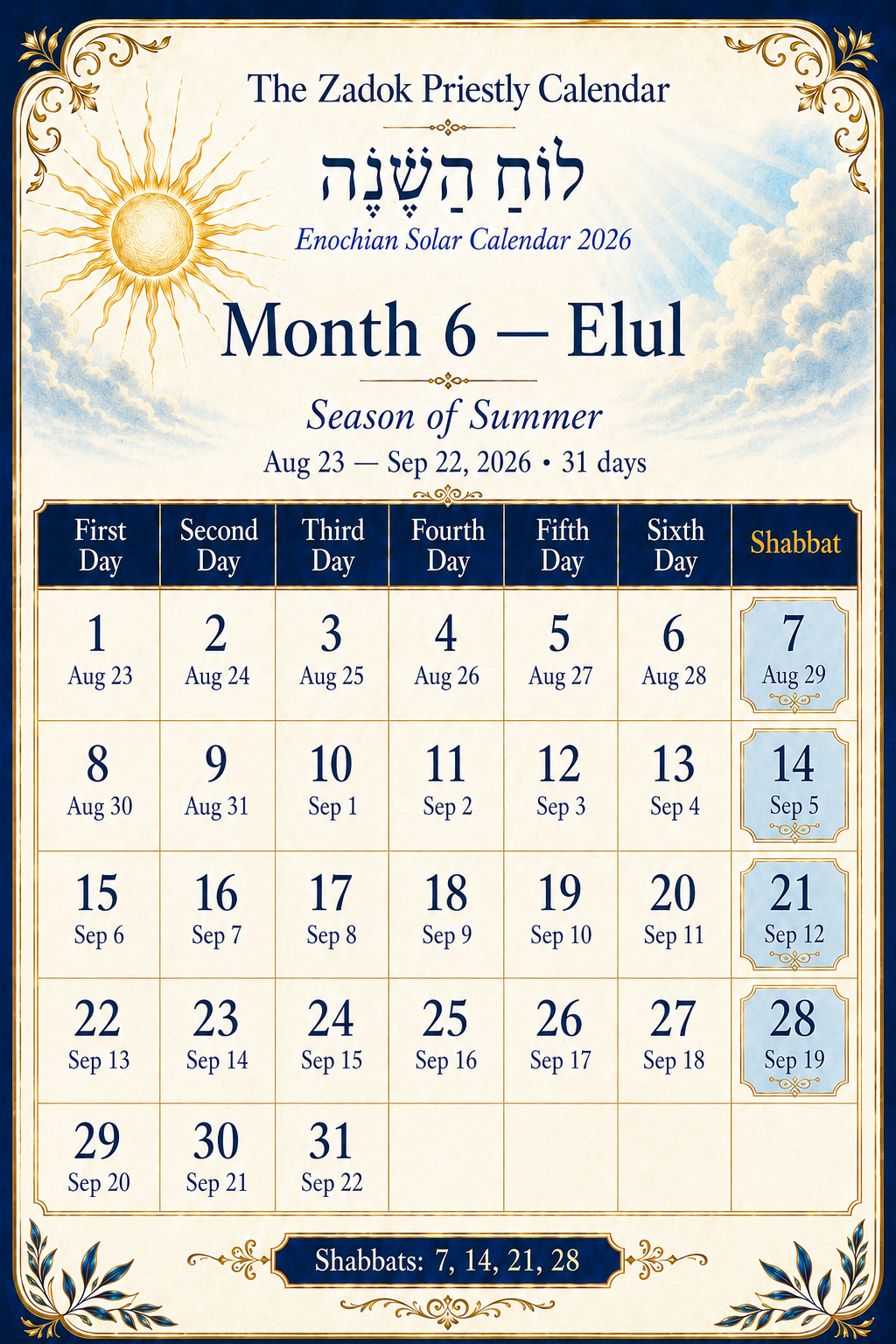
📅 Date – Updated daily at sunset CST
Today: 17th day of the 11th month (Zadok calendar)
February 8th, 2026 – 20th of Tevet 5786

Blessing on Those Who Fear Elohim
Today’s Random Psalm: Psalm 128
Blessed is everyone who fears Yahuah,
who walks in His ways.
You will eat the labor of your hands.
You will be blessed, and it will go well with you.
Your wife will be like a fruitful vine
within your house,
your children like olive shoots
around your table.
Behold, surely thus will the man be blessed
who fears Yahuah.
Yahuah bless you from Zion,
so that you may see the prosperity of Jerusalem
all the days of your life,
and see your children’s children.
Peace be upon Israel.
Bonus
Colossians 3:12–25
Put on then, as the elect of Elohim, holy and beloved, compassion, kindness, humility, gentleness, and patience,
bearing with one another and forgiving each other; if anyone has a complaint against another, just as the Messiah forgave you, so you also must forgive.
Above all these things put on love, which is the bond of perfect unity.
Let the peace of the Messiah rule in your hearts—to this peace you were called in one body. And be thankful.
Let the word of the Messiah dwell in you richly, teaching and admonishing one another with all wisdom, singing psalms and hymns and spiritual songs with gratitude in your hearts to Elohim.
And whatever you do, in word or deed, do all in the name of the Master Yeshua, giving thanks through Him to Elohim the Father.
Wives, submit yourselves to your husbands, as is fitting in Yahuah.
Husbands, love your wives and do not become bitter against them.
Children, obey your parents in everything, for this is pleasing in Yahuah.
Fathers, do not embitter your children, or they will become discouraged.
Slaves, obey in everything those who are your earthly masters, not with eye-service as people-pleasers, but with sincerity of heart, fearing Yahuah.
Whatever you do, work at it from the soul, as for Yahuah and not for men,
knowing that from Yahuah you will receive the inheritance as a reward. It is the Master Messiah you are serving.
For the wrongdoer will be repaid for the wrong he has done, and there is no favoritism.

Summary of Parashah Mishpatim
Exodus 21:1-24:18
Parashah Mishpatim represents one of the most profound transitions in Scripture. Immediately after the overwhelming revelation at Mount Sinai—thunder, lightning, trumpet blasts, smoke, and the audible voice of Elohim—the narrative pivots toward legal instruction. At first glance this may seem anticlimactic, yet the movement is deeply intentional. Divine encounter is never meant to remain an emotional peak; it must shape the structures of daily life.
Mishpatim answers a critical question: What does a redeemed society look like?
Israel has been liberated from slavery, but freedom without moral architecture collapses quickly into disorder. Therefore, Yahuah provides ordinances designed to cultivate justice, stability, and communal trust.
Justice Begins with Human Dignity
The opening laws concern Hebrew servants. In the ancient Near East, servitude was widespread, often harsh, and typically permanent. Torah regulation dramatically limits its scope. A Hebrew servant must be released after six years, ensuring that poverty does not become hereditary bondage.
This reveals something essential about the divine economy—systems must never consume the person.
Even the complicated case of a servant choosing lifelong attachment is framed not as coercion but covenantal belonging. The legislation acknowledges social realities while pushing them toward compassion.
Accountability and the Sanctity of Life
The text then turns toward bodily harm and liability. Premeditated murder is distinguished sharply from accidental killing, demonstrating a sophisticated moral awareness regarding intent.
Negligence is treated seriously. If someone leaves a dangerous pit uncovered or fails to restrain a violent animal, they bear responsibility for the consequences. Mishpatim refuses the illusion that harm without malice is harmless.
This legal precision communicates that life is sacred, and safeguarding it is a communal duty.
Property, Restitution, and Economic Integrity
The ordinances concerning theft are notably restorative rather than purely punitive. Repayment often exceeds the original loss, discouraging crime while repairing relational trust.
The Torah envisions an economy where honesty is normative and wrongdoing is corrected tangibly.
Financial ethics extend further. Charging interest to the poor is forbidden, preventing predatory cycles. Essential collateral—like a cloak—must be returned before nightfall so the debtor is not left exposed to the cold.
Justice here is practical empathy.
The Moral Priority of the Vulnerable
Few sections of Torah speak as forcefully about protecting society’s fragile members.
“Do not mistreat the stranger.”
“Do not afflict any widow or orphan.”
The rationale is theological memory: Israel knows the soul of the stranger because they were strangers in Egypt.
Suffering, in biblical thought, is meant to deepen compassion rather than justify hardness.
Yahuah warns that if the oppressed cry out, He Himself will act. This is covenantal advocacy—Elohim positions Himself as defender of those lacking power.
Truth in Public Life
Mishpatim also addresses the integrity of communal processes. False testimony, mob influence, and bribery are condemned. Justice must not bend toward popularity or wealth.
Even the instruction not to favor the poor in a lawsuit is revealing. Compassion must never corrupt truth; righteousness requires impartiality.
Returning an enemy’s lost animal pushes ethics beyond reciprocity into transformative goodness. Israel is called to resist the instinct for quiet revenge.
Sacred Time as Social Mercy
The Sabbath command appears again but with expanded scope. Rest is mandated not only for landowners but for servants, immigrants, and animals.
This is revolutionary.
Time itself becomes an instrument of justice.
Every seventh year the land is to lie fallow so the poor may gather what grows naturally. Ecological rhythm intersects with economic care.
The Torah refuses to separate spirituality from agriculture, labor, or social structure.
Guarding Covenant Identity
Warnings against idolatry follow. Israel must avoid adopting the worship patterns of surrounding nations. This is not mere religious exclusivity; it is moral preservation.
Idolatry in the ancient world often legitimized exploitation. To serve false gods was frequently to normalize unjust hierarchies.
Faithfulness to Yahuah protects ethical clarity.
Promise and Partnership
Yahuah promises to send a messenger ahead of Israel, guiding them into the land. Yet the promise carries a condition—obedience.
Blessing in Torah is seldom arbitrary. It flows from alignment with divine wisdom.
Health, provision, and security are portrayed as the natural ecosystem of covenant loyalty.
The Covenant Sealed
Exodus 24 provides one of Scripture’s most dramatic covenant ceremonies. Moses builds an altar, sacrifices are offered, and blood is sprinkled upon both the altar and the people.
Blood symbolizes life; the imagery declares that this relationship binds life to life.
When Israel proclaims, “We will do and obey,” they accept not only divine authority but divine purpose.
Notably, leaders ascend the mountain and behold Elohim while sharing a covenant meal. Fellowship accompanies obedience—law is not given to create distance but communion.
Revelation Continues Upward
Moses alone proceeds higher into the cloud, where he will remain forty days and nights. The visible glory resting upon Sinai reminds Israel that their legal framework originates from transcendent holiness.
The ordinances are not bureaucratic constructs; they are reflections of divine character translated into societal form.
Theological Implications
Mishpatim dismantles the false divide between sacred and secular. Courts, kitchens, farms, and fields all become arenas of worship.
Justice is liturgy enacted horizontally.
The parashah also challenges modern assumptions. Freedom is not defined as autonomy but as ordered responsibility. Rights are balanced by obligations.
Most importantly, righteousness is communal. A society cannot claim closeness to Elohim while tolerating exploitation.
Foreshadowing Greater Fulfillment
Later biblical writers echo Mishpatim’s heartbeat. Prophets thunder against injustice. Wisdom literature praises fairness. Yeshua intensifies the call by directing attention to the motives beneath behavior.
The trajectory is clear: transformed hearts produce transformed communities.
Enduring Message
Mishpatim insists that spiritual maturity is measured less by mystical experience and more by ethical consistency.
It teaches that:
- Power must protect, not consume.
- Wealth must not silence fairness.
- Memory should generate mercy.
- Worship must reshape economics and law.
Ultimately, the parashah portrays a breathtaking vision—a people among whom the character of Elohim becomes visible through daily interactions.
Revelation births responsibility.
Covenant demands embodiment.
Holiness looks like justice practiced when no one is watching.
And in that ordered righteousness, a redeemed community becomes a dwelling place for the Presenc

Zadok Calendar: https://zadokway.com/
Wear Your Faith Boldly
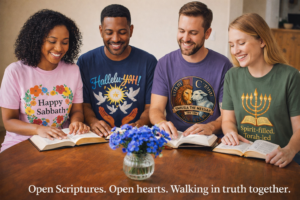
Explore our unique collection of Messianic T-shirts that celebrate your beliefs and heritage.
Join a community of believers who express their faith through stylish, Torah-inspired apparel.
Our designs reflect a joyful worship experience, connecting you to your roots.
Discover Your Heritage Through Fashion
Each piece is crafted to inspire and uplift, blending tradition with modern style.
Our shirts are more than just clothing; they are a statement of faith, identity, and community. Celebrate your Messianic roots with designs that resonate with your beliefs and values, making every outfit a testament to your journey.
Join the Movement Today!
Frequently Asked Questions
What is Torah Roots?
Messianic Torah Roots is a faith that combines obedience with the belief in Yahshua (Jesus) as the Messiah. It emphasizes the importance of the Torah and celebrates the Hebrew roots of Christianity.
How do I care for my Torah T-shirts?
To keep your Torah T-shirts looking great, we recommend washing them in cold water and hanging them to dry. Avoid bleach and high heat to preserve the designs.
Can I return or exchange my order?
Yes, we offer a 30-day return and exchange policy. If you’re not satisfied with your purchase, please contact us for assistance with the process.
Do you ship internationally?
Yes, we ship to select international locations. Please check our shipping policy for more details on rates and delivery times.
What materials are used for the shirts?
Our shirts are made from 100% premium cotton, ensuring comfort and durability. We prioritize quality to provide you with apparel that lasts while showcasing your faith and identity.
Need assistance with your order?
We’re here to help! If you have any questions or need support, feel free to reach out to us. Your satisfaction is our priority, and we’re eager to assist you.

⭐️⭐️⭐️⭐️⭐️
Excellent quality shirt! I wasn’t sure what to expect ordering online, but it really exceeded my expectations. The material feels durable but still super comfy, and the design is bold and clear. I wore it to Bible study and got several compliments—it’s a great way to share faith while wearing something you actually want to keep on all day.
Sarah